
Common Appliance Problems in Weston Homes
When a washing machine starts leaking in a Weston basement laundry area, the water often pools on the concrete floor before anyone notices — and by then, it has already soaked into stored boxes or crept toward the furnace. Many of the single-family homes here have their washers and dryers tucked downstairs, sometimes at the bottom of a narrow staircase that makes moving a full-size unit in or out a real project. That setup shapes the kinds of problems we see most often.
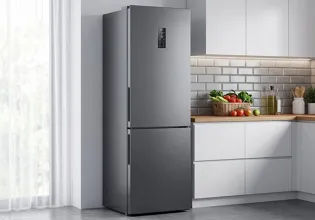
- Refrigerators that stop cooling properly, often because the condenser coils are caked with dust in a pantry alcove or a tight kitchen nook where airflow is limited.
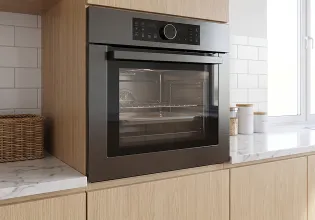
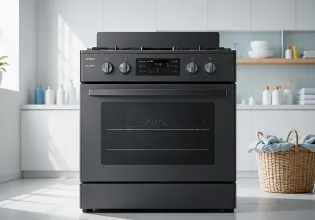
- Gas ovens and stoves that heat unevenly or won't ignite — worth checking quickly, because a failing igniter in a gas range can mean unburned gas is lingering near the burner.
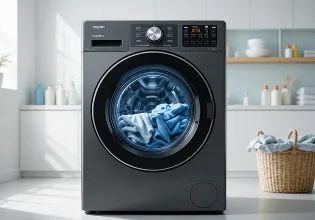
- Washers that won't drain completely. In older Weston homes, the standpipe in the basement may be partially clogged with years of sediment, and the machine itself gets blamed first.
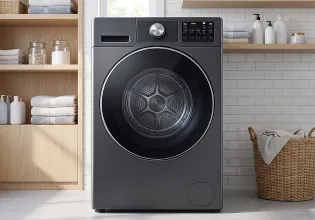
- Dryers that run a full cycle but leave clothes damp. We usually see this when the vent run through the basement wall is longer than it should be, or the exterior flap is blocked by leaves.
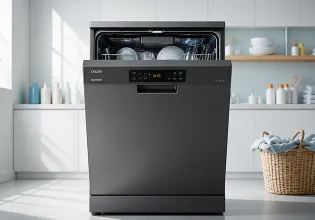
- Dishwashers leaving dishes cloudy or standing water in the tub after a cycle finishes.
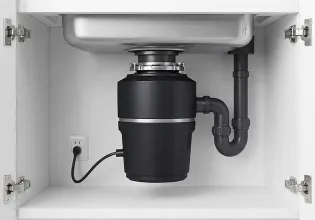
- Garbage disposals that jam or hum without spinning — often caused by a small bone or piece of silverware wedged in the grinding ring.
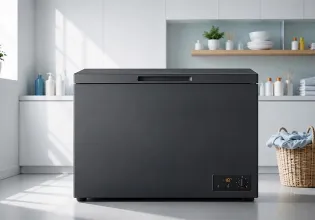
- Freezers building up heavy frost on the back wall, which usually points to a failed defrost heater or a door gasket that has lost its seal.
Local Utility, Permit, Safety, and Disposal Factors in Weston
Replacing or installing an appliance in Weston is not as simple as swapping the old one for the new one. The town's Building Department requires permits for gas appliance installations and replacements — that includes gas stoves and gas dryers. If the job involves new or modified electrical connections, an electrical permit is also required. And if you are hooking up a dishwasher or garbage disposal to the water supply or drain, the town requires a plumbing permit. All of that permitted work has to pass a Weston Building Department inspection before it is considered complete. So before you schedule an installer, ask whether they plan to pull the necessary permits. If they wave it off, that is a red flag.
The Massachusetts State Plumbing Code reinforces this at the state level: dishwasher and disposal connections must be done by a licensed plumber. Unpermitted plumbing work can result in fines and mandatory remediation. That is not a theoretical risk — it comes up during home sales when an inspector flags work that was never signed off.
Safety is the other side of the equation. If your Weston home has a gas stove, oven, or dryer, the Massachusetts State Fire Code requires working carbon monoxide detectors on every level. A malfunctioning gas burner or a cracked heat exchanger in a dryer can produce CO without any visible sign. The Weston Fire Department responds to appliance-related fire and CO calls townwide and offers fire prevention guidance that covers gas stoves, ovens, and dryers. If your CO detector goes off after running the oven, do not assume it is a false alarm — open windows, get out, and call the fire department at (781) 786-5060.
Dryer venting deserves its own mention. In Weston's older homes, the dryer often sits against a basement wall, and the vent has to travel through the foundation or up through the floor structure to reach the outside. Long vent runs collect lint faster and restrict airflow, which makes the dryer overheat. That is both a fire hazard and a common reason dryers stop heating properly. Checking the vent path is one of the first things a technician should do on a dryer call.
Weston's water comes through the MWRA water supply system, sourced from the Quabbin and Wachusett reservoirs. Water pressure and quality from the MWRA system directly affect how dishwashers fill, how washing machines rinse, and whether refrigerator ice makers work consistently. If a dishwasher suddenly takes longer to fill or a washer leaves soap residue, the issue may not be the appliance — it could be a partially closed shutoff valve or a pressure change in the municipal line.
What Makes Appliance Repair in Weston Different
Weston is almost entirely single-family homes on larger lots, many of them built decades ago and renovated over time. That means the wiring, plumbing, and gas lines behind a kitchen wall may not match what a modern appliance expects. An older 30-amp circuit feeding a range that now draws more, a gas shutoff valve buried behind cabinetry with no easy access, a basement laundry hookup where the drain standpipe is an odd height — these are the kinds of things a technician runs into here that would not come up in a newer subdivision. The permit and inspection structure through the Weston Building Department adds a step that many neighboring towns handle differently, so a contractor who works across several MetroWest communities needs to know Weston's specific process.
Disposal is another difference. You cannot simply drag a dead refrigerator to the curb on trash day. Weston residents must schedule bulky item pickups through the DPW, and appliances that contain refrigerants — like refrigerators and freezers — require special handling before the town will collect them. That makes repair a more practical first choice than it might be in a town with open curbside pickup, because the logistics of getting rid of the old unit are not trivial.
Appliance Replacement and Household Equipment Considerations in Weston
When a repair no longer makes sense — the compressor is shot on a fifteen-year-old fridge, or the control board on a washer costs more than a new machine — the next steps in Weston involve more than just picking a replacement at the store. Start with disposal: you will need to contact the Weston DPW to schedule a Weston DPW bulky item disposal pickup for the old unit. Refrigerators and freezers need their refrigerant handled properly before collection, so plan ahead rather than assuming same-week pickup.
If the new appliance requires any change to the gas, electrical, or plumbing connections — even something as simple as moving a gas dryer hookup a few inches to fit a different model — a permit from the Weston Building Department is required. The Building Department will inspect the completed work. Ask your installer to confirm the permit number before they leave. Skipping this step can create problems later, especially during a home sale when the buyer's inspector checks for open permits.
For water-connected appliances like dishwashers and washing machines, make sure the shutoff valves under the sink or behind the washer actually close all the way. In older Weston homes, gate valves that have not been turned in years often seize or fail to shut off completely. Replacing a corroded valve during installation is far cheaper than dealing with a slow leak behind the wall six months later.
Weston Department of Public Works
65 Norumbega Road
Weston, MA 02493
Phone: (781) 786-5100
Official Website
Areas We Serve Throughout Weston
We provide appliance repair service to homes throughout Weston, MA 02493. Because the town is predominantly single-family residential without sharply defined commercial districts, our service area covers the entire community. Here is what we typically encounter across different parts of town:
- Homes near the town center — Often among the oldest in Weston, with kitchens that have been remodeled around original plumbing. Dishwasher drain connections in these houses sometimes follow unusual routing that newer models do not accommodate without adjustment.
- Properties along Boston Post Road — A mix of home ages and sizes. Dryer venting in these houses often exits through a side wall close to grade level, where leaves and snow pile up against the vent cap.
- Homes in the northern part of town — Larger lots with longer driveways. Worth mentioning access to the technician: if a service van needs to park close to the house, make sure the path is clear in winter.
- Residences near the Weston Reservoir area — Many of these homes sit on sloped lots where the basement is partially above grade on one side. Washers and dryers down there usually have good venting options, but the stairs leading down can be steep and narrow.
- Houses along Wellesley Street — Some of the older colonials here have compact kitchens where a full-depth refrigerator barely clears the counter return. Measuring before ordering a replacement saves a painful discovery on delivery day.
- Properties near the Weston Middle and High School area — Postwar-era homes that often have original electrical panels. If a range or oven replacement needs a new dedicated circuit, the panel may need updating first.
- Homes in the western portion of town — Tend to be on well water in some cases, though most of Weston is on municipal MWRA water. If your home is on a private well, water pressure and mineral content affect appliance performance differently than town water.
- Residences near the South Avenue corridor — A number of renovated homes here have basement laundry setups with long dryer vent runs that pass through multiple elbows before reaching the exterior. These need cleaning more frequently than a straight, short run.